


Two retired teachers, Võ Quang Trọng and his wife, residing in Đổng Tháp, Vietnam, are confronting significant challenges in their pursuit of social housing. Despite their stable monthly pension of 22 million VND collectively, they have yet to secure a title for their home and claim they have not received any housing support under existing policies.
Table of Contents
Pensioners Seek Social Housing

Mr. Trọng registered for a social housing purchase, aided by confirmation from his workplace about his status as a retired civil servant and eligibility for a monthly pension. The local land registry office corroborated that they do not own any real estate. However, the Department of Construction denied their application, citing that Mr. Trọng’s retired status disqualifies him from the social housing support program. Instead, they classified him under the category of “self-employed” individuals, which does not qualify for such assistance.
In light of this predicament, Mr. Trọng inquired whether retired civil servants qualify for social housing and what procedures and agencies are involved in verifying their eligibility under the law.
Legal Framework for Social Housing
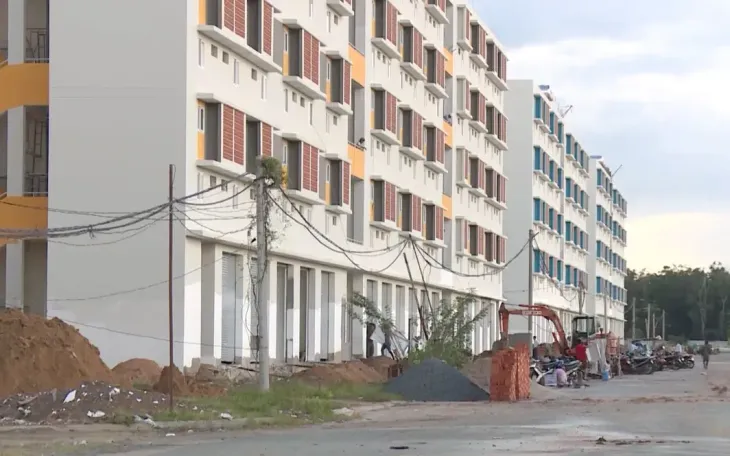
The Ministry of Construction addressed Mr. Trọng’s questions by referencing specific provisions of the newly implemented Housing Law of 2023. According to Article 76 of the law, it clearly defines individuals eligible for housing assistance. Paragraph 5 outlines that “low-income individuals in urban areas” qualify for support.
Furthermore, Article 78 details that individuals specified in various clauses—including those in points 1, 4, 5, 6, 7, 8, 9, and 10 of Article 76—must meet specific housing and income conditions to qualify for purchasing or renting social housing.
Requirement Clarifications
Notably, the regulations included in the government’s Decree No. 100/2024/ND-CP, which became effective on July 26, 2024, specify that individuals without property ownership—defined as those not listed in the land-use certificate—are eligible to apply for social housing. This provision includes both the applicant and their spouse, should they be married.
According to Chapter 1, Paragraph 1 of Article 29 in the decree, once an application to confirm a lack of property ownership is submitted, the local land registry office must process the acknowledgment within seven days.
Amendments and Income Conditions
On October 10, 2025, the government issued Decree No. 261/2025/ND-CP, which amended previous regulations, specifically enhancing provisions related to income criteria for married applicants. It altered the conditions so that the average monthly combined income of the applicant and spouse must not exceed 40 million VND, as confirmed by their respective employers.
The Ministry of Construction’s circular, issued November 10, 2025, outlines documentation required to prove eligibility for housing assistance. Those applying under various income categories must furnish evidence demonstrating their financial situations, consistent with the guidelines established by the 2023 Housing Law.
Importantly, the circular specifies that the employer of an applicant must certify their income details. In the case of applicants receiving a pension from the Social Insurance Agency, that agency, or the local commune people’s committee where the individual is registered, must provide the necessary verification.
Definitions and Restrictions
According to footnote six of the circular, individuals who are pensioned retirees in urban areas fall within the low-income category, provided they meet the defined income and housing requirements. Footnote eight clarifies that retired individuals must be explicitly identified as “low-income urban residents (retired)” to qualify under the law.
Given these intricate conditions, it is evident that retired individuals wishing to access social housing options must navigate a complex maze of requirements and bureaucratic processes.
Mr. Trọng’s situation sheds light on wider implications for retired civil servants, demonstrating the gaps and potential oversights in housing policy as they relate to pensioned individuals. It emphasizes the importance of clear guidance and support mechanisms as the government seeks to improve access to affordable housing for all citizens, particularly vulnerable groups in urban settings.
With regulatory adjustments and continued inquiries into social housing eligibility, retired individuals like Mr. Trọng will be watching closely to see how policies evolve to accommodate their needs, ensuring they are not left behind in the ongoing housing crisis.


